Here we share with you
various MCNEX stories.
- 기업소식MCNEX Vietnam Solar Power System to Generate 13,300 MWh Annually, Strengthening Global ESG Manufacturing DATE 2026-09-09
-
9,135 kW solar power system enters full operation, with approximately 6,000 tCO₂eq in annual greenhouse gas reductions expected
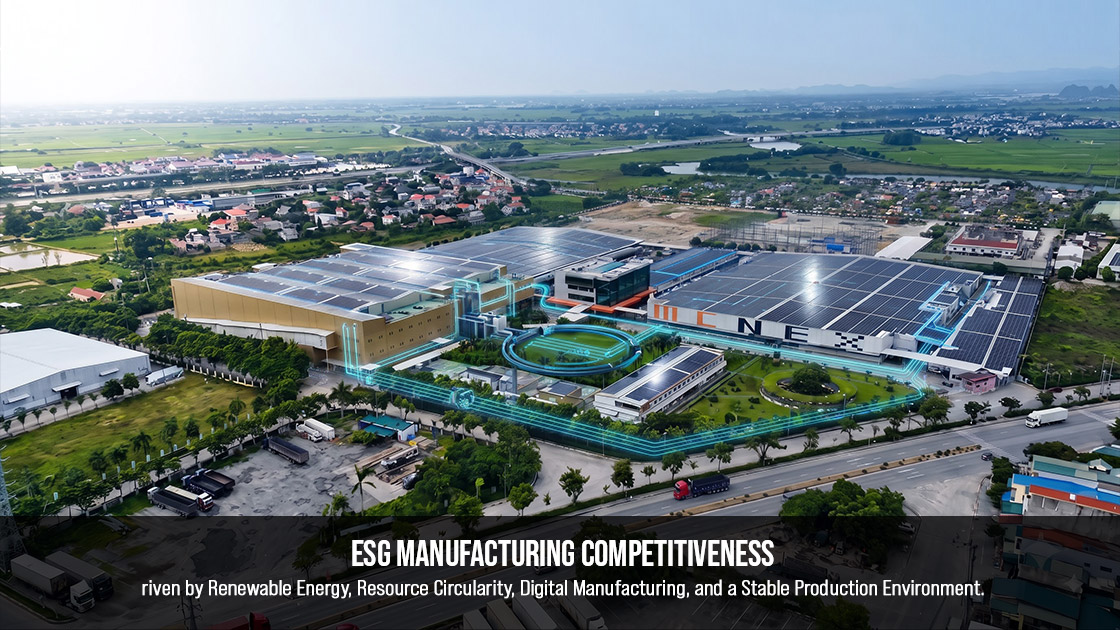
MCNEX has completed the installation of a 9,135 kW solar power system at its manufacturing facility in Vietnam and has begun full-scale renewable electricity generation.Comprising 11,622 solar panels, the system is expected to generate approximately 13,300 MWh of renewable electricity annually, while reducing greenhouse gas emissions by approximately 6,000 tCO₂eq per year.MCNEX is also expanding solar power infrastructure from its headquarters in Korea to its new manufacturing site in India as part of a broader transition toward more sustainable global manufacturing operations.
Manufacturing competitiveness is increasingly defined not only by production capacity and quality, but also by energy efficiency, carbon management, resource circularity, workplace safety and operational stability. As global automotive and technology companies place greater emphasis on greenhouse gas emissions and renewable energy use across their supply chains, environmental performance at manufacturing sites is becoming an increasingly important part of long-term competitiveness.
In response, MCNEX is integrating renewable energy deployment, water recycling, manufacturing digitalization and safe, stable operations across its domestic and overseas manufacturing sites. Rather than treating ESG as a stand-alone commitment, the company is translating sustainability initiatives into measurable improvements in energy use, resource efficiency and manufacturing operations.
Vietnam solar capacity: 9,135 kW
Solar panels: 11,622
Expected annual generation: Approximately 13,300 MWh
Expected annual GHG reduction: Approximately 6,000 tCO₂eq
Planned India solar capacity: 1,053 kW
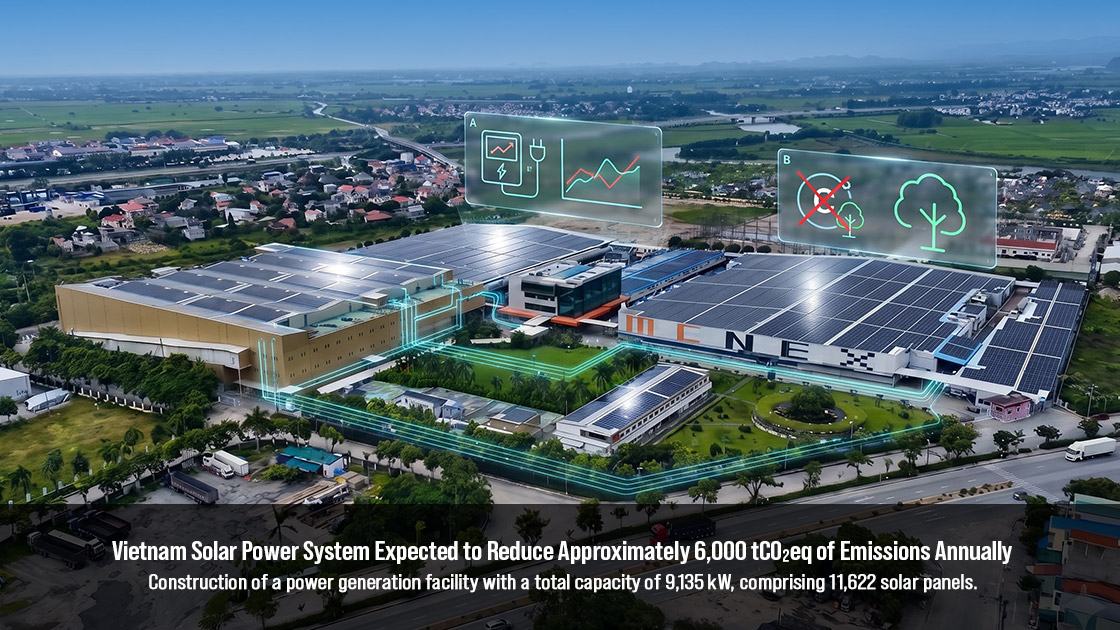
Vietnam Solar Power System Expected to Reduce Approximately 6,000 tCO₂eq of Emissions Annually
MCNEX has completed the installation of a 9,135 kW solar power system comprising 11,622 solar panels across previously unused rooftop areas at its Vietnam manufacturing facility.
Following commissioning through the 21st to verify system stability and generation performance, full-scale electricity generation began on the 22nd.
Vietnam provides favorable conditions for solar power generation due to its abundant sunlight. MCNEX is utilizing large rooftop areas at its manufacturing facility as on-site renewable energy assets, allowing part of the electricity purchased from external suppliers to be replaced with renewable electricity generated directly at the site.
The system is expected to generate approximately 13,300 MWh annually, equivalent to an average of approximately 36.5 MWh per day, while reducing greenhouse gas emissions by approximately 6,000 tCO₂eq each year.
The significance of renewable energy deployment extends beyond environmental performance. As automotive and technology companies increasingly assess renewable energy use and carbon emissions throughout their supply chains, energy transition at manufacturing sites is becoming closely linked to a supplier's ability to respond to customers' sustainability requirements.
On-site power generation can also reduce dependence on externally purchased electricity, helping improve resilience to energy-cost fluctuations while contributing to lower electricity costs and greater long-term manufacturing cost efficiency.
The initiative also provides a stronger foundation for responding to renewable-energy and emissions-reduction requirements across global supply chains, including RE100-related expectations.
As a supplier of mobile camera modules, automotive cameras, ADAS and autonomous-driving sensing systems to global customers, MCNEX continues to manage energy efficiency and environmental impact across its production operations as part of its effort to strengthen sustainable manufacturing capabilities.
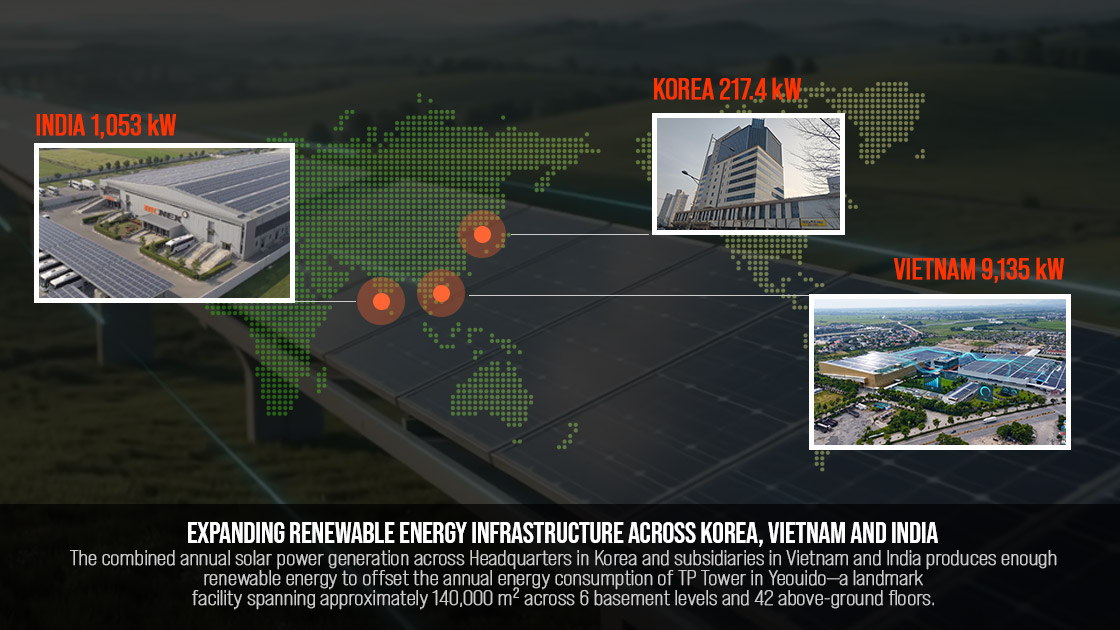
Expanding Renewable Energy Infrastructure Across Korea, Vietnam and India
MCNEX's renewable energy initiatives extend beyond its Vietnam operations.
At its headquarters in Korea, the company currently operates a 217.4 kW solar power system, generating approximately 264 MWh of electricity annually.
MCNEX also plans to install a 1,053 kW solar power system at its new manufacturing facility in India as part of the development of the site.
Once the planned solar installation in India is completed and operational, the combined annual solar energy generation from MCNEX's facilities in Korea, Vietnam and India is expected to reach a level comparable to the annual energy consumption of TP Tower in Yeouido, Seoul, a large-scale office complex with approximately 140,000 square meters of total floor area, six basement levels and 42 floors above ground.
Through these initiatives, MCNEX is gradually expanding renewable energy infrastructure across its major manufacturing sites in Korea, Vietnam and India, combining the expansion of its global production network with the development of more sustainable manufacturing operations.
As global customers increasingly evaluate not only product performance and quality but also the environmental impact of the manufacturing process, renewable-energy-based production infrastructure can provide a stronger foundation for responding to supply-chain sustainability requirements.
The approach is also significant because renewable energy infrastructure is being considered alongside the development of new manufacturing capacity. This connects sustainability not simply with individual environmental projects, but with the broader direction of MCNEX's global manufacturing network.
Over the long term, expanded use of renewable energy can support environmental performance while also contributing to greater energy efficiency, operational stability and manufacturing competitiveness.
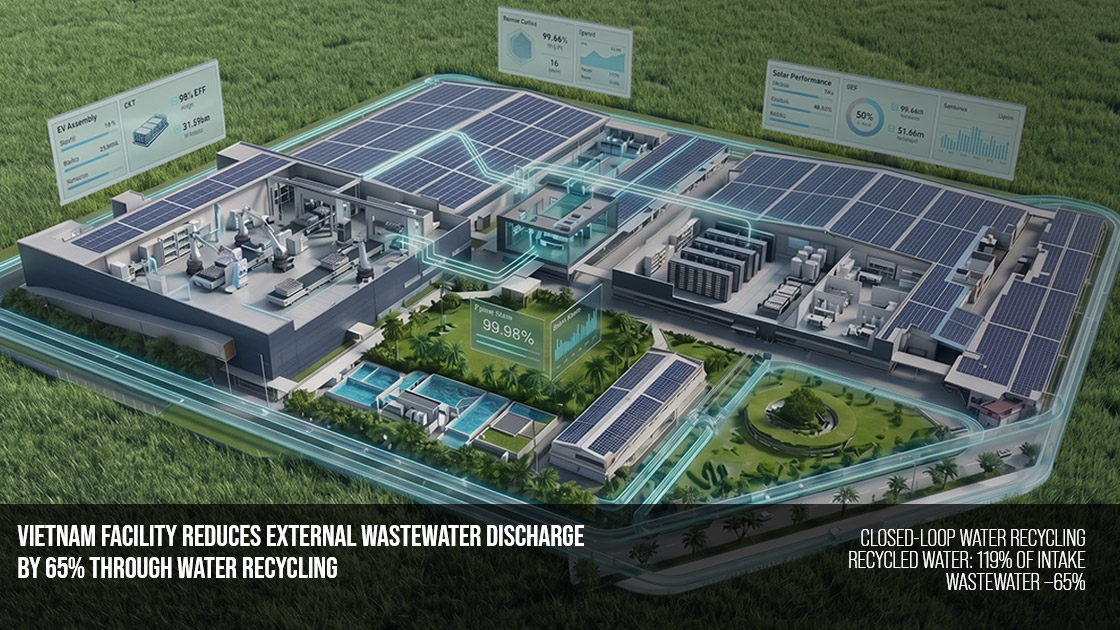
Vietnam Facility Reduces External Wastewater Discharge by 65% Through Water Recycling
MCNEX's sustainable manufacturing initiatives extend beyond energy to water-resource management.
The Vietnam facility operates a closed-loop industrial water recycling system that treats water used in manufacturing processes and recirculates it for reuse within the facility.
In 2025, the volume of recycled water used at the site reached a level equivalent to 119% of total water intake for the year. This reflects repeated treatment and reuse of water within the recycling cycle, helping reduce the amount of newly supplied water required for manufacturing operations and improve overall water-use efficiency.
By expanding water recycling, the facility has reduced external wastewater discharge by 65%. MCNEX plans to further increase water reuse, with the goal of reducing external wastewater discharge by more than 90%.
The facility also operates a wastewater monitoring system to manage the quality of process water and discharged water in real time. Recycled water is maintained at a Grade 1 level under MCNEX's internal water-quality management standards.
Water availability and wastewater management are closely connected not only to environmental performance but also to stable manufacturing operations. Improving water-use efficiency can reduce reliance on newly supplied water while lowering wastewater volumes and the associated treatment burden.
Through this closed-loop water-management system, MCNEX is working to reduce the environmental impact of its manufacturing operations while improving resource efficiency and the long-term sustainability of its production site.
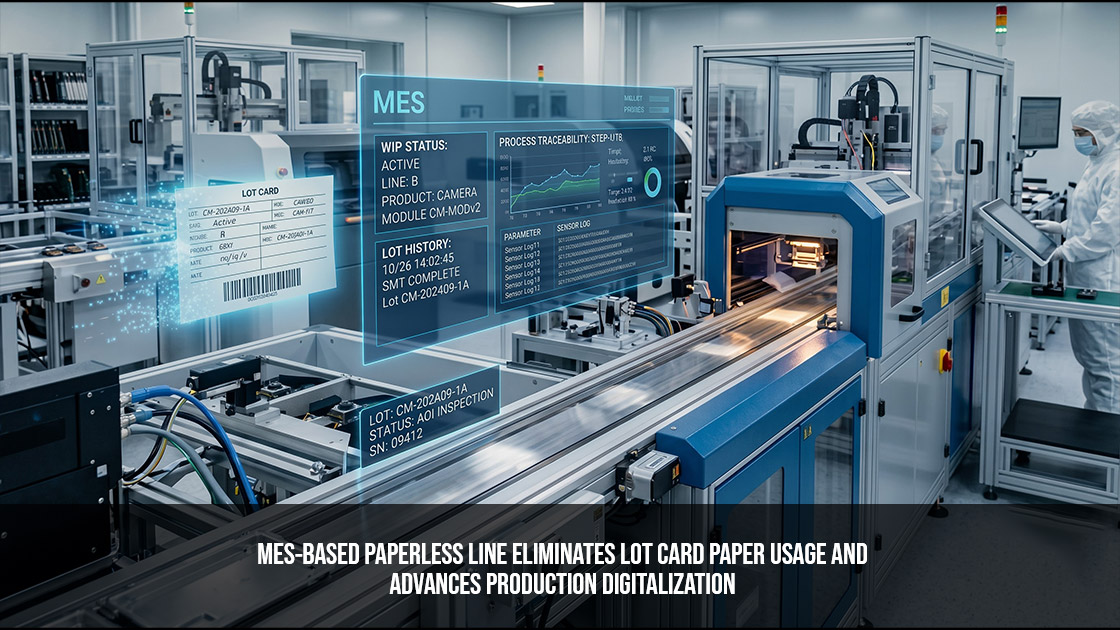
MES-Based Paperless Line Eliminates LOT Card Paper Usage and Advances Production Digitalization
Digital transformation is another important component of MCNEX's efforts to reduce resource consumption in manufacturing.
In 2022, MCNEX introduced a Manufacturing Execution System (MES) to digitalize production management and establish a Paperless Line, replacing production processes that had previously relied on physical documentation.
During the three years prior to MES implementation, an average of 15,733 LOT Cards were used annually on the production floor. Following the implementation of MES, physical LOT Cards were fully replaced with digital records, reducing paper usage for this production-management process to zero.
The benefits, however, extend well beyond paper reduction.
Real-time management of production records and process information provides a stronger foundation for improving data accuracy and traceability while enabling production information to be accessed and managed more efficiently.
For manufacturers, accurate and traceable production data supports process management, quality control and production-history tracking. In this respect, the Paperless Line contributes not only to resource efficiency but also to the digitalization and operational efficiency of manufacturing management.
Through these initiatives, MCNEX continues to strengthen a smart manufacturing framework that combines resource efficiency with more advanced production-data management.
13 Years of Accident-Free and Dispute-Free Operations Support Stable Manufacturing in Vietnam
Sustainable manufacturing requires not only environmental management but also workplace safety and stable operations.
Since beginning operations in 2013, the MCNEX Vietnam facility has maintained 13 consecutive years without industrial accidents or labor disputes, supporting a stable manufacturing environment.
By prioritizing workplace safety and maintaining cooperative labor relations, the facility continues to provide the operational stability required of a major global manufacturing site.
A safe workplace and stable labor environment are more than internal management indicators. For global manufacturers, operational stability is closely connected to product quality, delivery performance, production continuity and supply-chain risk.
For a company supporting large-scale production and long-term supply to global customers, a stable manufacturing environment also provides an important foundation for customer confidence and reliable supply.
MCNEX therefore manages workplace safety and stable labor relations alongside its environmental initiatives as core elements of a sustainable global manufacturing framework.
Translating ESG Management into Measurable Changes in Manufacturing
Based on these ESG achievements, MCNEX was recognized among the “ESG Best Companies 100” selected by Sustinvest.
A defining feature of MCNEX's ESG approach is its focus on measurable changes within actual manufacturing operations rather than on targets and declarations alone.
At its Vietnam facility, the company generates renewable electricity through large-scale solar power, recycles industrial water through a closed-loop system, reduces paper consumption through its MES-based Paperless Line, and maintains a stable production environment through workplace safety management and cooperative labor relations.
Together, these initiatives form an integrated sustainability framework:
Renewable Energy → Resource Circularity → Manufacturing Digitalization → Stable Production → Sustainable Global Manufacturing Competitiveness
This approach reflects the view that ESG is not separate from manufacturing competitiveness. Energy efficiency, resource utilization, production data and operational stability can all contribute to a more sustainable and resilient global production system.
As environmental performance and supply stability become increasingly important across global supply chains, sustainable manufacturing infrastructure can also provide a foundation for strengthening relationships with existing customers and supporting future global customer diversification and new business opportunities.
MCNEX plans to continue expanding renewable energy use and advancing resource-circulation systems across its domestic and overseas manufacturing sites, strengthening both manufacturing competitiveness and environmental value.
MCNEX Sustainable Manufacturing FAQ
Q. What is the capacity of MCNEX's solar power system in Vietnam?
A. The Vietnam manufacturing facility operates a 9,135 kW solar power system comprising 11,622 solar panels.
Q. How much renewable electricity is the Vietnam solar system expected to generate?
A. The system is expected to generate approximately 13,300 MWh of renewable electricity annually, with an estimated greenhouse gas reduction of approximately 6,000 tCO₂eq per year.
Q. Is MCNEX expanding solar power infrastructure to India?
A. Yes. MCNEX plans to install a 1,053 kW solar power system at its new manufacturing facility in India.
Q. What are the water-recycling results at the Vietnam facility?
A. In 2025, recycled water use reached 119% of annual water intake, and external wastewater discharge was reduced by 65%. MCNEX plans to reduce external wastewater discharge by more than 90%.
Q. What did MCNEX achieve through its MES-based Paperless Line?
A. MCNEX replaced physical LOT Cards with digital records. An average of 15,733 LOT Cards had been used annually during the three years before MES implementation, and paper use for this process was reduced to zero.
Related Technology Content
ESG Management SystemExplore MCNEX's sustainability framework covering climate action, environmental management, workplace safety, supply-chain ESG and responsible governance.
Environmental Management, Climate and Resource EfficiencyReview MCNEX initiatives in renewable energy, greenhouse-gas management, water, wastewater and resource efficiency across manufacturing operations.
ESG ReportAccess MCNEX sustainability reports, certifications and environmental and safety performance across its headquarters and overseas manufacturing sites.
Global Manufacturing and R&D NetworkView MCNEX production, research, development and customer-support capabilities across Korea, Vietnam, China and India.
Smart Manufacturing, Quality and Mass-Production CompetitivenessExplore MCNEX capabilities in production digitalization, quality validation, automation and high-volume manufacturing.
ADAS Sensing and Sensor Fusion SolutionsReview the automotive camera, radar, LiDAR and image-recognition technologies supported by MCNEX's global manufacturing network.