Here we share with you
various MCNEX stories.
- 기업소식MCNEX Expands Its Future Growth Platform Across India Manufacturing, ADAS, SiP and Robot Vision DATE 2026-08-30
-
MCNEX Expands Growth Platform Across India Manufacturing, Future Mobility, Semiconductor Packaging and Robotics
From ADAS and automotive semiconductors to robot vision sensing and precision motion technology
As vehicles evolve from transportation tools into intelligent platforms capable of perceiving their surroundings, and as robotics and XR create new device categories, the role of cameras and sensing technologies is expanding rapidly.
MCNEX is responding to these industry shifts by extending the technologies and mass-production experience built through its mobile and automotive camera businesses into adjacent growth areas, including ADAS, automotive semiconductor packaging, next-generation sensing and robotics.
In the second half of 2026, the company plans to begin mass production of automotive semiconductor packaging, a business it has prepared for approximately three years. In 2027, MCNEX also plans to bring its India manufacturing facility, currently under construction, into full operation.
At the same time, MCNEX is expanding technology and business foundations in areas closely linked to its existing camera and motion-control capabilities, including SVM cameras, front sensing cameras, in-cabin cameras, automotive radar, CLCC for image sensors, D-ToF and I-ToF-based distance sensing, and robotic actuators.
India Manufacturing Hub to Strengthen Global Customer Support
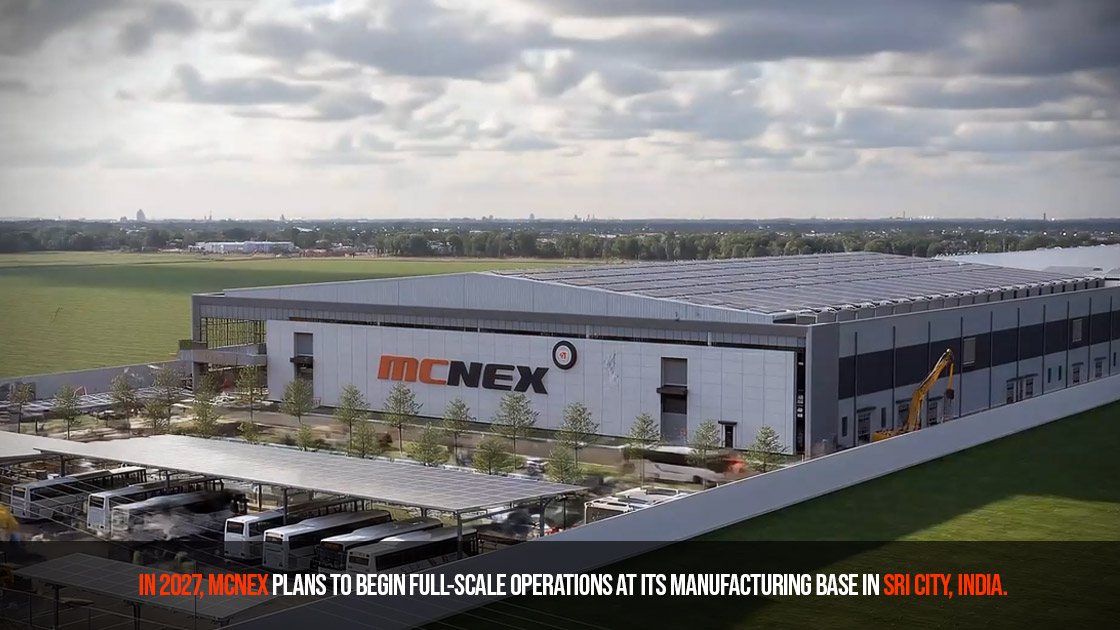
In the global automotive industry, supplier competitiveness increasingly depends not only on product technology, but also on local manufacturing capability and a stable supply structure. To address these customer requirements, MCNEX established its Indian subsidiary in August 2025 and is constructing a 52,609-square-meter manufacturing facility in Sri City, Andhra Pradesh.
The facility is targeted for completion by the end of 2026 and is scheduled to enter full-scale mass production in 2027. It is intended to serve as a strategic production base that supports the growing Indian automotive market, responds to customer localization needs and helps mitigate tariff-related cost pressures on automotive components.
Through local production, MCNEX aims to strengthen price competitiveness and supply stability while building a manufacturing and sales platform capable of supporting customers in India as well as Europe. The company began sales activities targeting Indian and European customers roughly two years before establishing the Indian subsidiary, and it is continuing discussions on key customer projects.
For global automotive customers, product performance is only one part of supplier evaluation. Local responsiveness, supply stability, cost competitiveness and scalable mass-production capability are also critical. The India manufacturing hub is expected to become an important competitive foundation as MCNEX works to expand its global automotive customer base.
From Cameras to Radar: Expanding the Automotive Sensing Portfolio
The India facility is expected to manufacture key automotive electronics products that MCNEX is expanding in its automotive business. Planned production items include SVM (Surround View Monitoring) cameras, front sensing cameras, in-cabin cameras and automotive radar systems.
Each product supports a different area of vehicle perception. SVM cameras help monitor the vehicle's surroundings, front sensing cameras serve as key sensors for perceiving the road environment ahead, and in-cabin cameras are finding broader applications in recognizing the vehicle interior and occupant conditions.
With automotive radar added to this portfolio, MCNEX is broadening its automotive sensing business beyond camera-centered applications. In line with global customer requirements, the company plans to expand its production scope into next-generation automotive electronics, including sensor-fusion ADAS systems that use multiple sensors such as cameras and radar.
By combining camera technologies that cover both the exterior and interior of the vehicle with broader sensing technologies such as radar, MCNEX is gradually strengthening its technical foundation to address the evolving ADAS requirements of global automotive customers.
Automotive Semiconductor Packaging Moves from Development to Mass Production
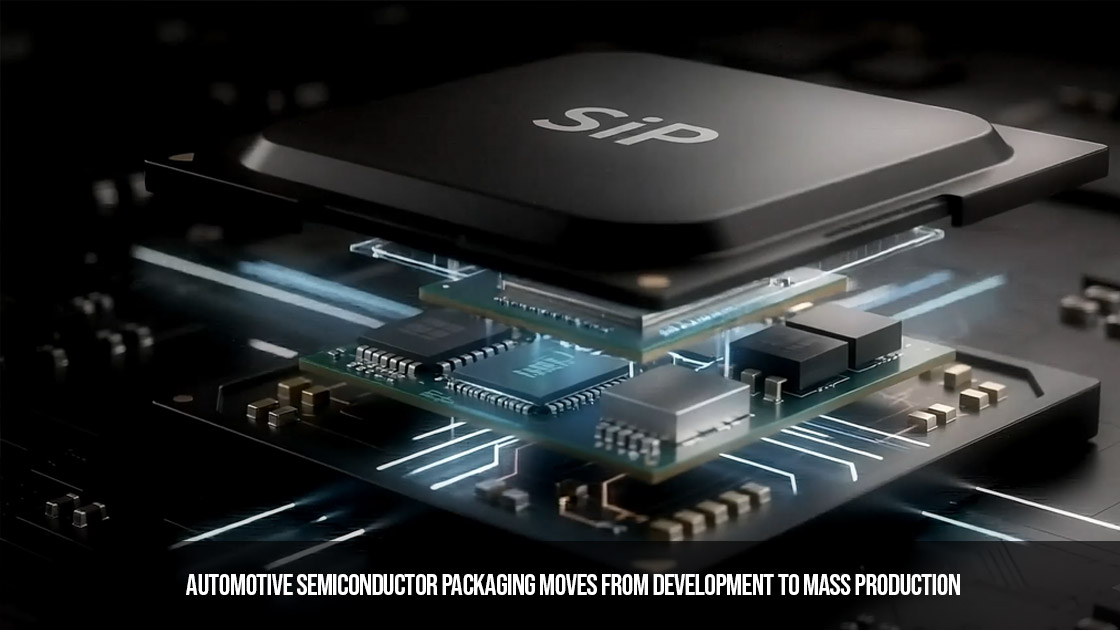
Among MCNEX's future growth businesses, automotive semiconductor packaging is one of the first areas to enter a concrete mass-production phase. The company plans to begin full-scale mass production in the second half of 2026 after approximately three years of preparation, marking a transition from R&D and business preparation to actual customer response and production.
MCNEX is also expanding its CLCC (Ceramic Leadless Chip Carrier) business for automotive image sensors. Because automotive cameras must maintain stable performance over long periods under demanding conditions such as temperature variation and vibration, image sensors and related components require a high level of durability and reliability.
CLCC is a key packaging component for automotive image sensors. By expanding this business, MCNEX aims to internalize core image-sensor components and strengthen the technological linkage with its existing automotive camera business. This move extends the company's scope beyond camera modules into image-sensor-related components and packaging, while reinforcing supply competitiveness in automotive cameras.

Miniature Camera Expertise Extends into Robot Vision Sensing
The application of camera and sensing technologies is expanding beyond vehicles into robotics and next-generation devices. For robots to move and operate in real-world human environments, they must continuously perceive nearby objects and surrounding space, making compact cameras and distance-sensing devices increasingly important.
Humanoid robots, in particular, may use compact cameras and sensors not only in the head as primary vision devices, but also across the arms, legs, knees, waist and other body areas to detect nearby objects and the surrounding environment. In such applications, performance must be supported by miniaturization, lightweight design, consistent quality and reliable mass-production capability.
MCNEX is expanding robot vision sensing technologies by leveraging miniature camera design, global mass-production and quality-management experience accumulated through its smartphone and automotive camera businesses. The company is currently developing D-ToF (Direct Time of Flight) and I-ToF (Indirect Time of Flight) sensors for spatial perception and distance measurement, along with miniature imaging sensor systems for wearable devices.
These developments represent a technological foundation for extending camera technologies proven in smartphones and vehicles into next-generation device markets such as robotics and XR.
Precision Motion Technology Expands Alongside Sensing
For robots, accurately perceiving the surrounding environment is only part of the challenge. They must also move precisely based on the information they perceive. Humanoid robots may use multiple miniature cameras not only in the head, but also across joints and body areas such as the arms, legs, knees and waist. These cameras can help recognize nearby objects and surrounding space in real time, supporting more precise robotic movement.
As a single humanoid robot may require multiple cameras and sensors, key requirements include miniaturization, lightweight design, high reliability, consistent quality across units and stable high-volume manufacturing capability. MCNEX is expanding the application of robot vision sensing technologies based on miniature camera design, global production experience and quality-management capabilities accumulated through its smartphone and automotive camera businesses.
MCNEX is also developing robotic actuators based on fine-motion and precision position-control technologies acquired through its mobile OIS and actuator business. If cameras and ToF-based sensing technologies serve as the robot's eyes, actuators are the key components that help joints and moving parts reach the required positions with precision.
By extending miniature camera, vision sensing and precision motion technologies from its mobile and automotive businesses into robotics, MCNEX plans to gradually expand its portfolio of key robotic components, including vision sensing devices and actuators.
From Technology Development to Mass Production: Accelerating Execution of Future Growth Businesses
The start of automotive semiconductor packaging production in the second half of 2026 and the planned launch of the India manufacturing hub in 2027 are important milestones in MCNEX's future business strategy. They mark the point at which selected initiatives prepared through R&D and investment begin moving toward customer projects and production.
MCNEX is expanding the application of capabilities accumulated in its mobile and automotive camera businesses, including miniature design, sensing, precision motion control, quality management and mass production. In automotive applications, the company is expanding from cameras into radar and ADAS sensing, while broadening its business scope into camera-related components through automotive semiconductor packaging and CLCC.
In robotics and XR, MCNEX is developing miniature cameras, ToF-based distance and spatial sensing, and robotic actuators. At the same time, it is building a new manufacturing foundation in India to support the stable supply of these technologies and products to global customers.
In particular, automotive semiconductor packaging production in the second half of 2026 and the India manufacturing hub scheduled for 2027 are expected to become key milestones as selected new-business investments move from development and preparation toward actual production.
The next priority is to translate these technology and manufacturing investments into customer programs and stable mass-production expansion. Based on the technologies and global manufacturing experience accumulated through its camera business, MCNEX plans to continue expanding new business opportunities across automotive electronics, automotive semiconductors, next-generation sensing and robotics.
MCNEX is expanding its proven imaging and mass-production capabilities into ADAS, automotive semiconductor packaging, robot vision sensing and precision actuation.
MCNEX Future Growth Business FAQ
Q. What are MCNEX's future growth drivers?
A. MCNEX is expanding its future growth engines around ADAS cameras, automotive radar, automotive semiconductor SiP (System in Package) and CLCC, robot vision sensing based on D-ToF and I-ToF, robotic actuators, and its manufacturing hub in India.
Q. What is MCNEX's automotive semiconductor business?
A. MCNEX is advancing its SiP (System in Package) business, which integrates multiple automotive semiconductor chips into a single package, with plans to transition to mass production in the second half of 2026.
Q. What robotics technologies is MCNEX developing?
A. MCNEX is developing distance and spatial vision-sensing solutions based on D-ToF and I-ToF technology, ultra-miniature cameras, and robotic actuators utilizing precision motion/position control technologies.
Q. When will MCNEX's production facility in India be operational?
A. MCNEX aims to complete construction of its Sri City manufacturing hub in India by late 2026 and initiate full-scale operations in 2027.