NEWSROOM
Here we share with you various MCNEX stories.
- Title4D Imaging Radar and MCNEX’s Sensor Fusion Strategy DATE 2026-07-08
-
4D Imaging Radar and MCNEX’s Sensor Fusion Strategy
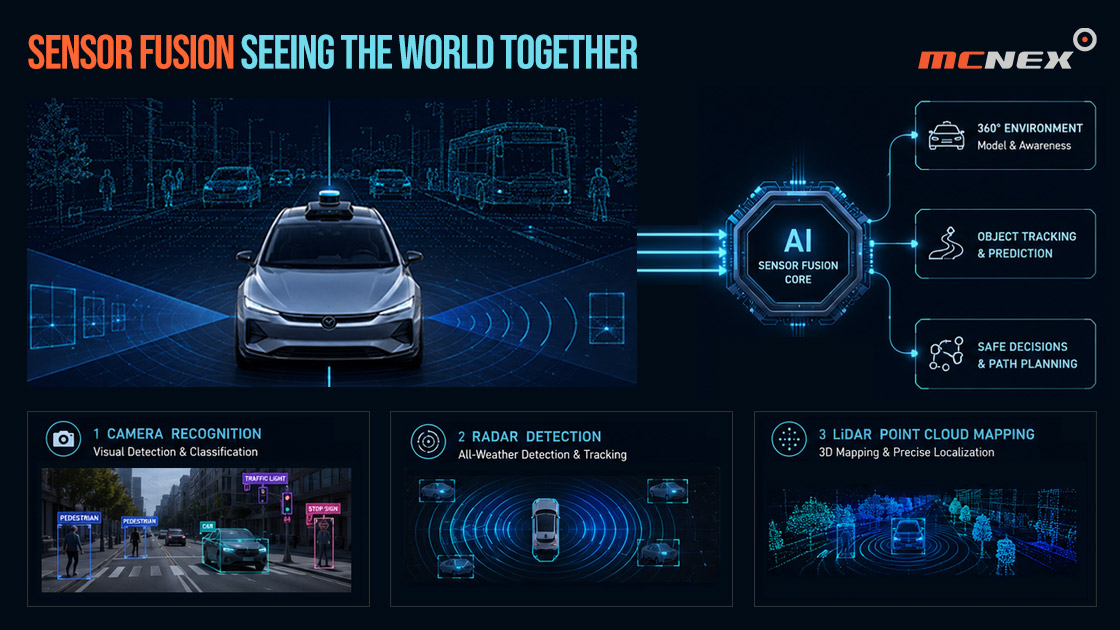
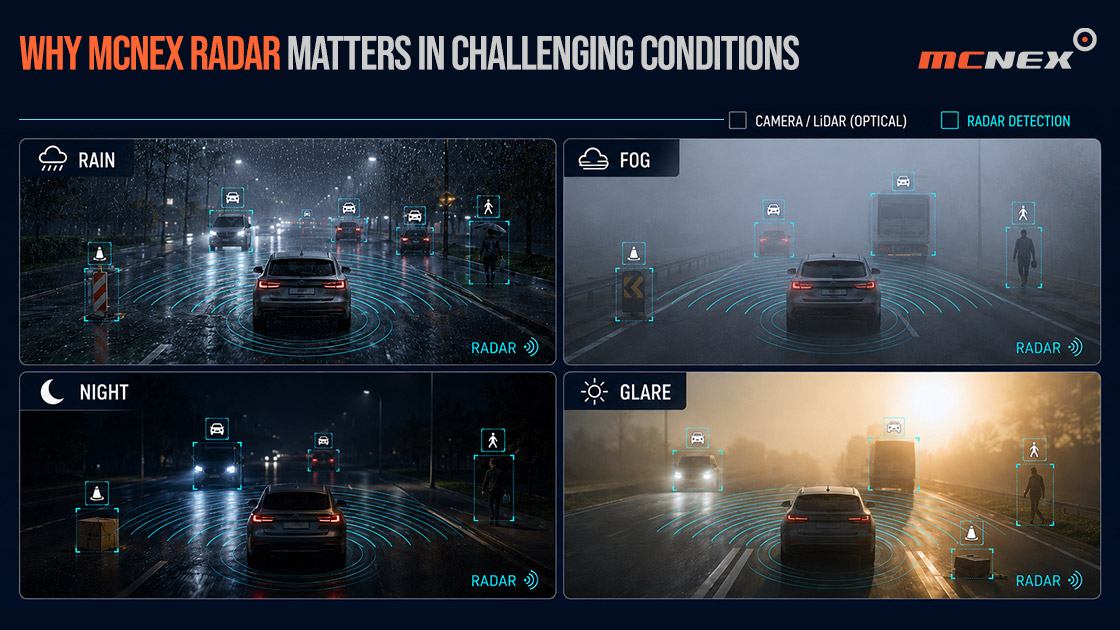
As autonomous driving and smart mobility continue to evolve, reliable environmental perception is becoming a core requirement for next-generation vehicles. Cameras provide rich visual information, while LiDAR supports precise 3D spatial recognition. However, both technologies may face limitations in rain, snow, fog, darkness, or glare.
Radar complements these limitations by using millimeter-wave signals to detect object distance, velocity, and direction with strong resilience to changing weather and lighting conditions. Based on its expertise in camera modules and automotive sensing, MCNEX is strengthening its Camera + Radar fusion strategy for high-reliability ADAS and autonomous driving solutions.
The Rediscovery of Radar
Autonomous vehicles rely on cameras, LiDAR, and radar to understand their surroundings. Cameras recognize lanes, pedestrians, and traffic signs, while LiDAR generates point cloud data for 3D environmental mapping.
In real-world driving conditions, however, optical sensors can be affected by weather, lighting, dust, or glare. Radar, as a radio-wave-based sensor, can reliably measure object distance and relative velocity, making it an essential technology for ADAS and autonomous driving safety systems.
The Rise of 4D Imaging Radar
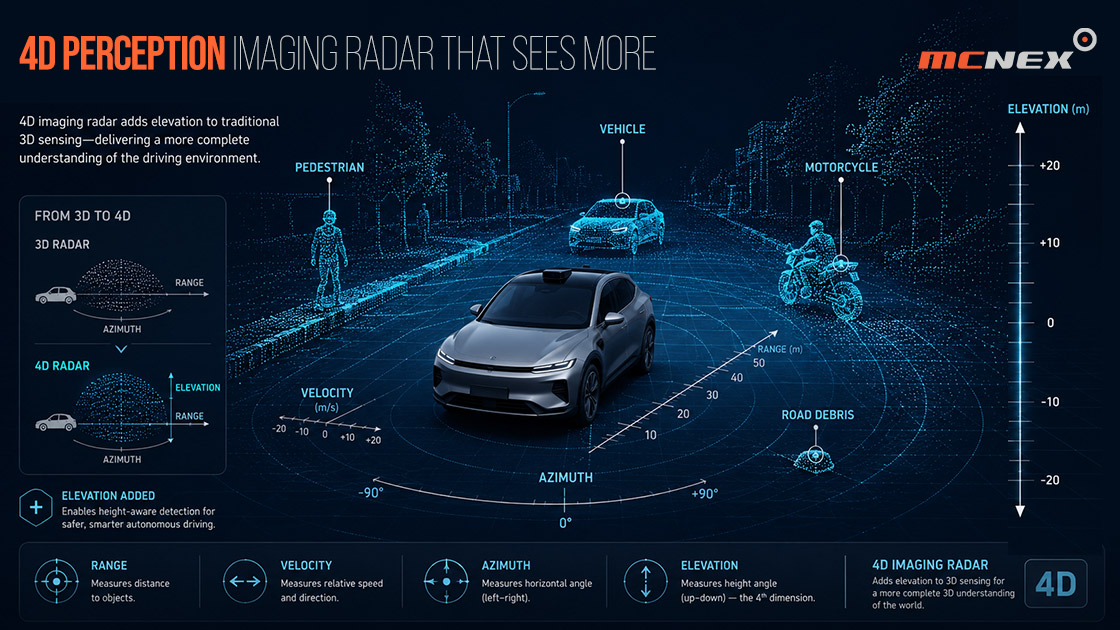
Conventional automotive radar has mainly detected range, velocity, and azimuth. 4D imaging radar adds elevation data, enabling a more three-dimensional understanding of the surrounding environment.
This allows vehicles to better distinguish cars, pedestrians, motorcycles, curbs, and road debris. With high-resolution point cloud-based perception, 4D imaging radar is emerging as a next-generation sensing technology that complements cameras and LiDAR.
MCNEX’s Multi-Purpose Intelligent Radar Solutions
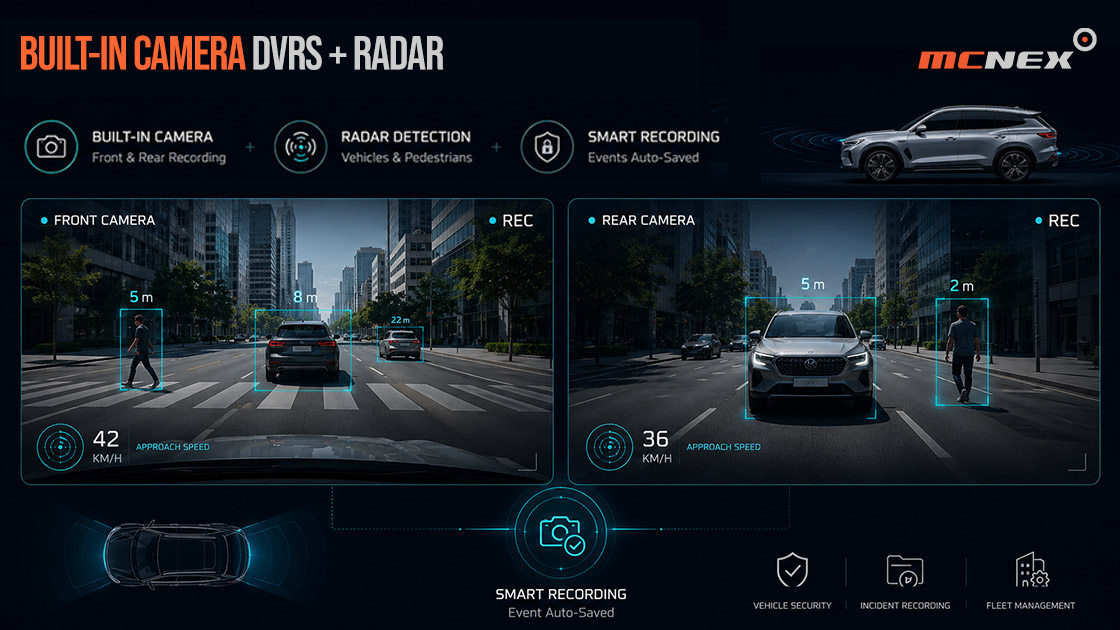
1- Built-in Camera DVRS + RADAR
MCNEX’s Built-in Camera DVRS + RADAR solution integrates front and rear cameras with radar sensing to detect nearby objects in real time. Cameras provide visual context, while radar measures distance, velocity, and approach direction.
This combination can improve perception reliability in low-light or harsh weather conditions and can support vehicle security, accident recording, fleet management, and smart logistics applications.
2- Door Obstacle Detection Radar
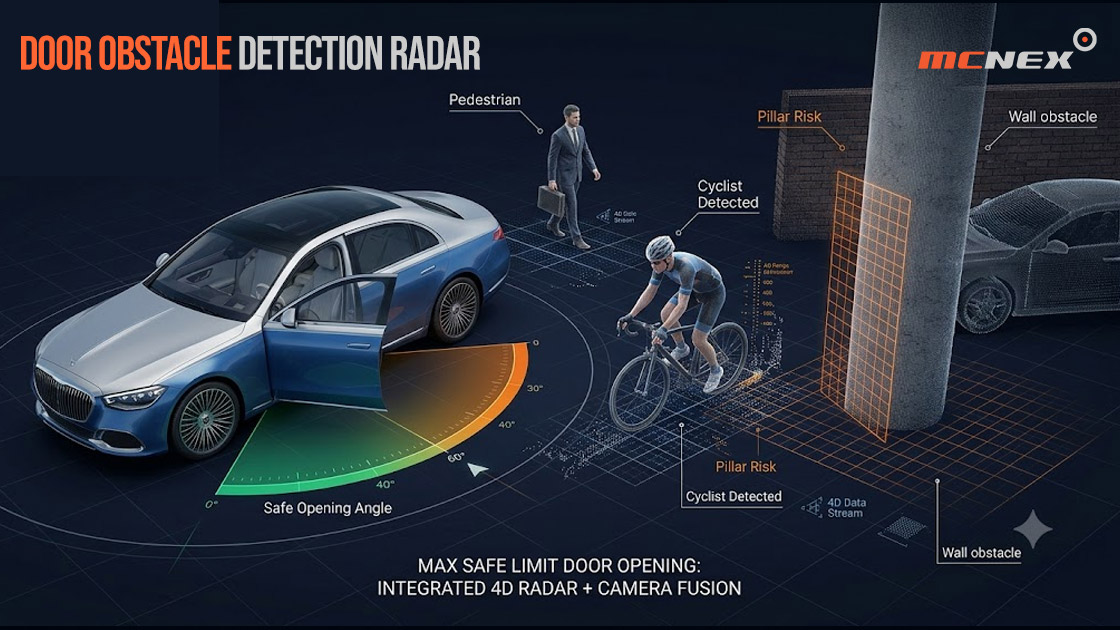
As power doors, sliding doors, and electric tailgates become more common, obstacle detection around the vehicle is becoming increasingly important. Door radar can detect pedestrians, cyclists, walls, pillars, and nearby vehicles using a wide field of view.
This information can support safe door-opening angle control, helping prevent collisions and enhancing both safety and convenience.
3-Parking Radar
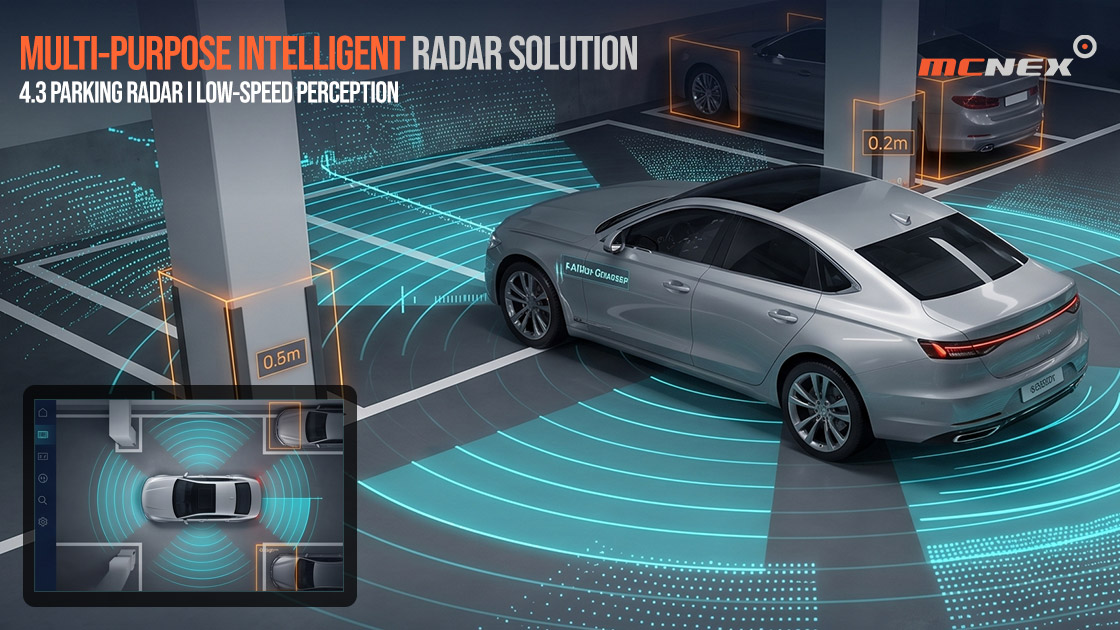
Parking and low-speed driving environments carry a high risk of minor collisions. Parking radar can detect object distance, direction, and approach speed, enhancing automated parking, remote parking, and low-speed autonomous driving.
When combined with MCNEX’s SVM, SRM, and DVRS technologies, radar can become part of an integrated sensing portfolio covering driving, parking, and vehicle security.
Market Outlook and Expansion Potential
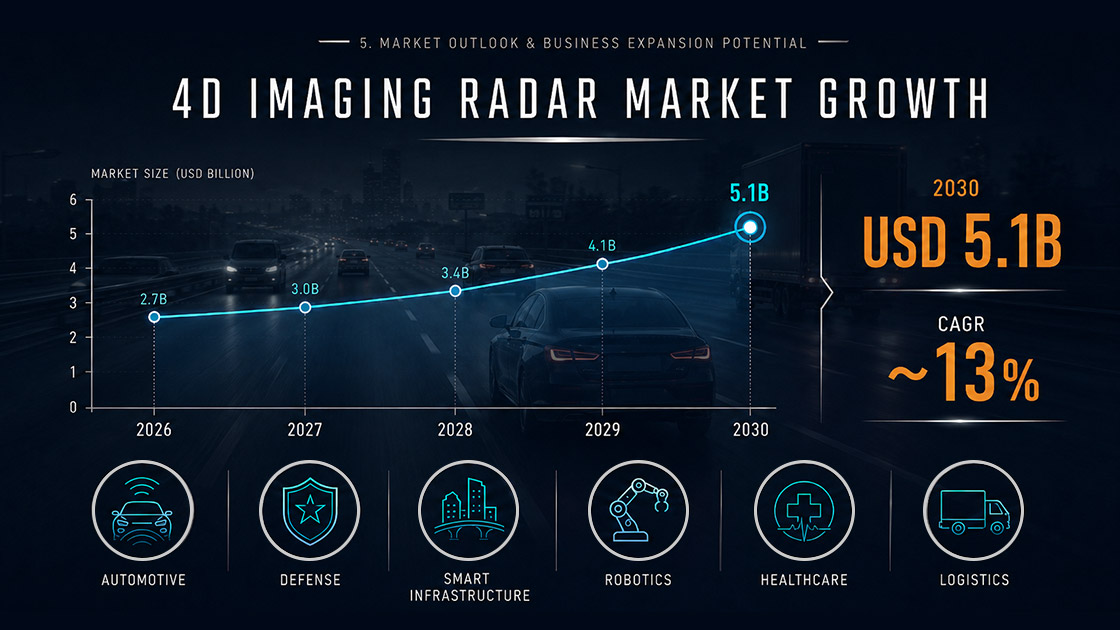
The global 4D imaging radar market is expected to grow rapidly with the expansion of ADAS and autonomous driving technologies. Market research forecasts an annual growth rate of approximately 13%, reaching around USD 5.1 billion by 2030.
Radar demand is also expanding beyond automotive applications into defense, industrial automation, smart infrastructure, robotics, drones, logistics, and healthcare.
Future Vision Beyond Mobility
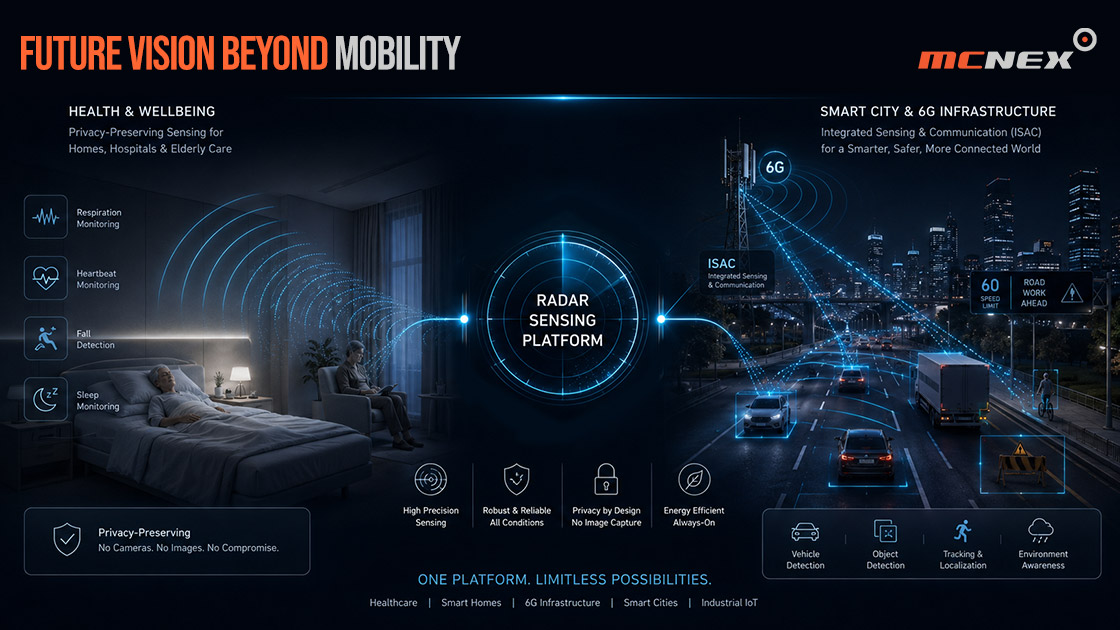
Radar can detect human movement and vital signs without capturing identifiable images. This enables contactless monitoring of respiration, heartbeat, falls, and sleep status in privacy-sensitive spaces such as smart homes, hospitals, and elderly care facilities.
In the 6G era, Integrated Sensing and Communication, or ISAC, is expected to become an important technology direction. As vehicles, infrastructure, and communication networks become more connected, MCNEX’s camera and radar fusion capabilities can become a valuable foundation for future intelligent sensing ecosystems.
The future of mobility will depend not only on the number of sensors, but on how accurately and reliably sensor data is fused and delivered to the vehicle control system.
By integrating optical camera technologies with radar sensing, MCNEX is building a scalable sensor fusion portfolio across autonomous driving, parking assistance, vehicle security, smart infrastructure, and healthcare. MCNEX will continue to grow as a trusted global sensor fusion partner for the era of autonomous mobility and intelligent infrastructure.
#MCNEX#4DImagingRadar#RadarSensor#SensorFusion#CameraRadarFusion#ADAS#AutonomousDriving#AutomotiveCamera#MobilitySensing#FutureMobility#SmartMobility#DoorRadar#ParkingRadar#DVRS#민동욱대표